



Fashion as a way of life
- Dec 5, 2016
- 4 min read

There are a zillion synagogues at Bathurst and Sheppard. That’s an exaggeration but factual in its own way. The area is predominantly Jewish, with a kosher bakery and kosher sushi bar conjoined along Bathurst Street and a Holocaust memorial not too far from that. Rabbi Mendy Lieberman lives in that area. He’s a 25-year-old graduate rabbi working as a director of the student outreach program at Yeshivas Lubavitch Toronto, where students study the Torah and learn to live a religious life. I insist that a Yeshiva student’s attire plays an unpretentious role in the discussion of fashion. He responds that there's not much to explain about their humble style. The following 30 minutes prove otherwise.
He tells me a story about a man named Rabbi Menachem Mendel Schneerson. When students greeted Schneerson on his arrival to the U.S. in 1941, they learned that the brim of Schneerson’s black hat was bent downward as a sign of academic restraint. Schneerson felt that one must be knowledgeable but nobody must know how much you know.
“[The Torah] says a sage should dress properly and modestly. It says the way a person walks down the street people can see what type of person he is. So when [he walks] down the street in a more humbled type of dress code he is projecting an example of what would be right,” Lieberman explains.
A Yeshiva student’s attire is all about first impressions. That day, the student’s who met Schneerson got a glimpse of the impression they would eventually leave on those they encountered. Their attire, a white shirt, black suit, black dress pants and a black hat, was considered stylish in the 1950s. Like a Chanel dress, it can never be out of style. It is a staple in the fabric of the Chabad-Lubavitch movement, marking the beginning of Rabbi Schneerson’s expansive influence in their community.
Sitting at the head of his long dining table, Rabbi Lieberman explains that, unlike the attire of other religious communities, there are no embellishments. The sophisticated black ensemble is meant to keep a Yeshiva student focused on his duties.
“We’re not trying to stand out. We’re trying to be humble and wear something that would be respectful for someone who is studying the way of the Torah and someone who is dedicating their life to carrying out God’s will in this world,” he says.
A classic black and white outfit can take you a long way, but it was the lack of variety in styles and colours that inspired Sadiyya Ali, 30, to open a modest fashion boutique. Along with her husband, Nabeel Nasir, she runs Bahiya Collections, a boutique that caters to Muslim women. It's been online since 2009, before modest garments were as easily accessible as they are today. The struggle to find items that individualized her appearance was real for Ali. You could find basic headscarves and long dresses anywhere, but not all in one location.
“Women love to shop. We love our clothes, but I couldn’t find things. [Modest clothing] is available now, but it wasn’t readily available then,” she says. “You had to piece together long sleeve tops, undershirts and it was harder to find wider leg pants and long skirts. You’d find things, but they weren’t very pretty or it wouldn’t fit you properly.”
Thus the launch of Bahiya Collections. At Bahiya, Ali carries pieces only from Muslim designers. Online, you can order swimwear that covers your body from head to ankle, active wear and maternity wear. Ali says having an easy to use website kept them somewhat above the competition. Now that everyone else has caught up, she says it’s become harder to purchase designs wholesale.

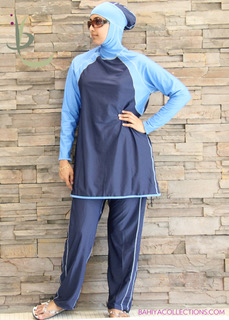



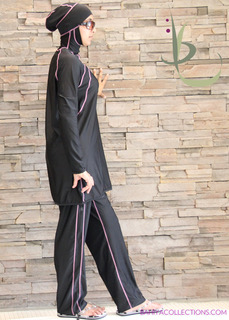

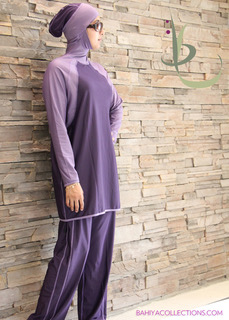

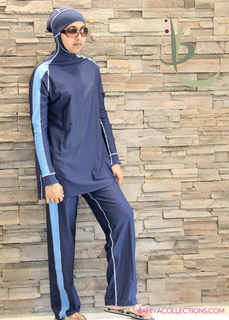
“When we started, we were one of the few [modest stores] that had a properly designed website…but now it’s harder for me to source items. When the designers were starting out, we bought from them and resold. Now they have their own e-commerce sites so they’re a bit more skeptical of actually wholesaling to other brands,” she says.
Her solution is to design her own items in a few years. For now, she’s enjoying the fact that the Muslim fashion industry is making a grand appearance globally. CoverGirl’s taken Nuria Afia, a Muslim beauty blogger who wears a hijab, as a brand ambassador. Hijarbie, an Instagram account featuring a diverse collection of hijab-wearing Barbies, has accumulated nearly 76,000 followers. Ali believes these accomplishments will benefit her company and other women like her.
“It’s kind of on trend right now so I’m hoping that trend continues,” she says.
“A lot of my friends who are not Muslim or who don’t dress as modest will buy a long skirt because it’s on trend and everyone goes with the trend but for me, as a Muslim women, someone who dresses modestly, it’s a lifelong way of dressing.”
My final encounter was with Parambir Keila, a Sikh street fashion icon in Toronto, who is also paving the way for diversity in the fashion industry. Keila, 35, almost always wears black, always supports Toronto-based designers and is always asked generic questions about his turban.
When asked what common misconception he would like to debunk about his role as a Sikh in the fashion industry, Keila says, “That being fashion forward and Sikh need not be mutually exclusive.”
Like the Yeshiva students of Lubavitch, Keila was taught that impressions matter and was inspired by his upbringing to indulge in the fashion world.
“I was taught from a young age that it's important to put your best foot forward, including all aspects of how you present yourself,” he says. “My current interest in fashion stems largely from my wife. Fashion has been a consistent theme in our relationship.”
Keila was named one of Toronto’s Best Dressed by Toronto Life and appeared in a 2014 campaign for Holt Renfrew. He agrees with Ali’s belief that the ongoing inclusion of diverse roles in the fashion industry is more than a trend.
“Be a part of the solution,” he says. “I love that our collective conception of beauty is expanding outside of the confines I grew up with. This is wonderful, and I feel lucky to be a small part of it.
Comments